

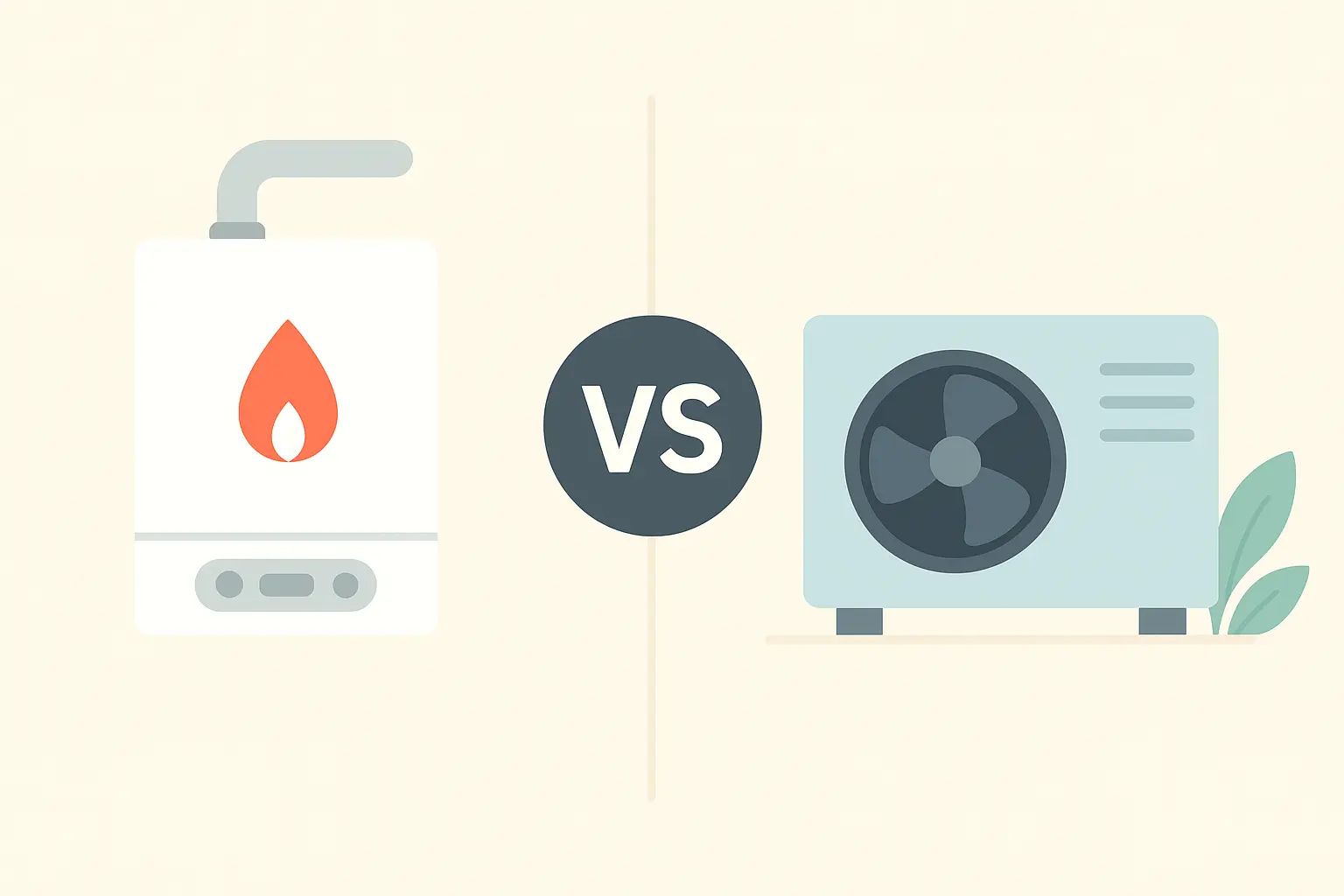
If you are looking to swap your boiler for a more efficient heating system, it is worth taking a proper look at what is actually right for your home rather than just following the latest trend. I’ve worked in houses across Dublin and Leinster for years, and the biggest mistake I see is people choosing a system without understanding how it will work day to day in their property.
When it comes to Boilers and Heat Pumps, there is no one-size-fits-all answer. Both have their place. It depends on your house, your insulation levels, your budget and how you like your home to feel in the evening when you turn the heating on.
Why Choosing the Right Heating System Matters
Heating is not a small upgrade. It is the heart of the house. Get it right and you’ll have steady comfort, manageable bills and fewer breakdown headaches. Get it wrong and you might be dealing with lukewarm rooms or higher electricity costs.
I often get asked, “Should I just stick with a boiler? They’ve always worked fine.” That can be true. Modern condensing boilers are far more efficient than older models. But at the same time, heat pumps have moved on hugely and can be a very smart option in the right home.
The key is understanding how they work and what they need from your property.
Boilers Explained: How They Work, Pros and Cons
How boilers work
A gas or oil boiler burns fuel to heat water. That hot water is pumped through your radiators and taps. It is a direct, high-temperature system. When you turn the heating on, those radiators get hot quickly.
Pros of boilers
- Quick heat response. Good for homes that cool down during the day.
- Works well with existing radiators and pipework.
- Often simpler to install as a straight replacement.
- Lower upfront cost compared to a full heat pump installation in many cases.
Cons of boilers
- Uses fossil fuels such as gas or oil.
- Less efficient overall than heat pumps.
- Carbon emissions are higher.
In places like Navan and Blanchardstown, many homes were built with boilers in mind. Swapping an old unit for a new A-rated boiler is often straightforward. If your insulation is average and you like fast heat in the morning, a boiler still makes practical sense.
Heat Pumps Explained: Benefits, Limitations and Suitability
How heat pumps work
A heat pump does not create heat by burning fuel. It extracts warmth from the outside air and upgrades it using electricity. Even on a cold day, there is heat energy in the air. The system compresses it and transfers it into your home.
Unlike boilers, heat pumps run at lower temperatures for longer periods. Rather than blasting very hot radiators for a few hours, they gently maintain a steady background heat.
Benefits of heat pumps
- Very efficient in the right property.
- Lower carbon emissions.
- No on-site gas or oil combustion.
- Can pair well with underfloor heating.
Limitations to consider
- Higher upfront installation cost.
- May require radiator upgrades or additional insulation.
- Performance depends heavily on property heat loss.
I have seen heat pumps work brilliantly in newer builds around Leixlip where insulation standards are high. In older cottages with solid walls and draughty floors, it takes more planning. Often we discuss improving insulation first before making the switch.
If you are curious about combining technologies, there is also the option of hybrid systems which are explained in more detail here: heat pumps and hybrid systems.
Boilers vs Heat Pumps: Key Differences in Cost, Efficiency and Comfort
When comparing Boilers vs Heat Pumps, I usually break it down into three things homeowners care about most.
1. Installation cost
Boiler replacements are generally cheaper upfront, especially if you are sticking with the same fuel type and existing pipework.
Heat pumps typically involve more work. You may need larger radiators, hot water cylinder upgrades and electrical checks. Grants can offset some of this, but it is still a bigger project.
2. Efficiency and running costs
Heat pumps can be significantly more efficient because they move heat rather than generate it through combustion. However, real-world savings depend on how well insulated your home is and electricity tariffs.
Modern condensing boilers are efficient too, particularly when correctly sized and set up. I often find systems running poorly not because the boiler is bad, but because controls haven’t been configured properly.
3. Comfort and heat feel
This is where experience matters. Boilers give punchy heat. Radiators get properly hot. Some homeowners prefer that immediate warmth.
Heat pumps provide steady, even comfort. The house feels consistently warm rather than hot and cool in cycles. Once people get used to it, many prefer it but it is a different feel.
Which Option Is Best for Your Home?
If your house is well insulated with modern windows and decent airtightness, a heat pump is well worth serious consideration.
If you live in an older property with existing gas infrastructure and average insulation, replacing your boiler with a modern high-efficiency model might be the more practical short to medium term choice.
I usually advise homeowners to think about:
- Age and insulation level of the property
- Current radiator sizes
- Available budget
- Future plans such as extensions or renovations
Sometimes the honest answer is to improve insulation first, then revisit the heating question. Heating systems work best when the building itself is not leaking warmth.
Final Thoughts and Next Steps
When weighing up Boilers vs Heat Pumps, the right answer depends on your home rather than the headlines. Both systems can work very well when specified and installed properly.
If you would like straightforward advice based on your actual property, the team at Intec can assess your home and talk through realistic options without any pressure. Every house in Ireland has its own quirks, and heating should be designed around that.
Contact our team today to discuss your heating options. A proper conversation now can save years of discomfort or unnecessary expense later.


